

Introduction
Property development opportunities across New South Wales are increasingly defined by uneven patterns of population growth, infrastructure investment and local planning conditions. Demand is no longer concentrated solely within Sydney’s traditional growth corridors. Instead, it is emerging across a mix of suburban infill locations and regional centres where affordability, connectivity and employment drivers are aligning.
For developers and investors, the implication is clear. Identifying viable opportunities requires a more granular understanding of how demand is forming at a local level, and how planning frameworks and infrastructure delivery influence feasibility, timing and exit strategy.
Understanding where growth is occurring
Growth across New South Wales is fragmented rather than uniform. Sydney remains the dominant market, but limited land supply and tighter planning controls are pushing development toward infill and redevelopment opportunities within established suburbs. At the same time, regional centres are attracting increasing attention as affordability and lifestyle factors drive migration away from metropolitan areas.
This shift creates a dual-track market. Infill development within Sydney is driven by scarcity and density uplift, while regional growth is supported by population inflows, employment and relative affordability.
Suburban infill opportunities in Sydney
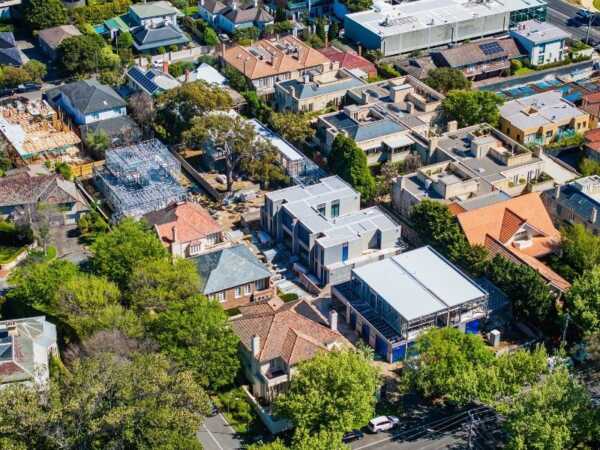
Within Sydney, development activity is increasingly focused on established suburbs where zoning allows for intensification. Locations with strong transport links, access to schools and proximity to retail and employment hubs continue to attract demand.
Suburbs such as Belfield, Clovelly and Wolli Creek illustrate how well-located areas can sustain ongoing development activity despite limited land supply. Projects in these locations are typically driven by redevelopment rather than greenfield expansion, with a focus on increasing density within existing urban footprints.
Success in these markets depends on aligning development with planning controls and local demand. Sites that offer clear pathways for intensification, supported by strong amenity and accessibility, are more likely to achieve favourable outcomes.
Growth dynamics on the Central Coast
The Central Coast has emerged as a significant growth area, supported by its proximity to Sydney and a more affordable housing base. Locations such as Umina Beach and North Gosford are attracting both owner-occupiers and investors seeking value relative to metropolitan markets.
Infrastructure improvements are playing a key role in this growth. Transport upgrades and proposed developments are enhancing connectivity between the Central Coast and major employment centres, making the region more accessible for commuters.
However, supply dynamics need to be monitored closely. As new housing stock enters the market, there is potential for increased competition, which can influence pricing and absorption rates.
Regional centres gaining momentum
Regional New South Wales is experiencing sustained growth in selected centres where employment, infrastructure and lifestyle factors align. Cities such as Tamworth, Orange and Newcastle demonstrate how regional markets can support ongoing development activity.
Tamworth benefits from its role as a regional service hub, supporting consistent housing demand. Orange attracts residents through a combination of lifestyle appeal, education facilities and local employment opportunities. Newcastle has undergone significant transformation, evolving into a diversified city with strong cultural and economic drivers.
In each of these locations, demand is underpinned by a combination of job creation, infrastructure investment and improved amenity. This creates a more stable foundation for development compared to purely speculative markets.
The role of infrastructure in shaping demand
Infrastructure investment remains one of the most important drivers of property demand across New South Wales. Transport upgrades, including major road improvements and rail expansions, directly influence accessibility and can significantly increase the attractiveness of a location.
Access to essential services such as schools, healthcare and retail also contributes to sustained demand. Areas with established or improving amenity are more likely to support consistent absorption of new development, particularly in family-oriented markets.
Government policy and planning initiatives further shape where development occurs. Programs aimed at increasing housing supply and encouraging urban renewal often direct activity into specific locations, creating targeted opportunities for developers.
Comparing metropolitan and regional markets
Metropolitan and regional markets offer different risk and return profiles. Sydney’s suburban markets are typically characterised by higher entry costs and lower rental yields, but stronger long-term capital growth prospects driven by limited supply and high demand.
Regional centres, by contrast, often provide lower entry costs and higher rental yields. This can support stronger cash flow, particularly for income-focused investments. However, long-term performance in regional markets is more closely tied to local economic conditions and employment stability.
Understanding these differences is essential when assessing development opportunities, as it influences both feasibility and exit strategy.
Lifestyle factors influencing development demand
Lifestyle considerations are playing an increasingly important role in shaping where people choose to live. Access to open space, community facilities and a lower-density environment is attracting residents to suburban and regional locations.
At the same time, access to transport, education and healthcare remains critical. Locations that balance lifestyle appeal with practical accessibility tend to achieve stronger and more stable demand.
Community engagement and local identity also contribute to long-term occupancy and demand. Areas with active communities and strong local amenities are more likely to retain residents and support consistent property performance.
Managing development risk across regions
Development risk varies significantly between locations and needs to be managed accordingly. In metropolitan areas, risks are often associated with planning constraints, competition for sites and higher construction costs. In regional markets, risks are more closely linked to economic conditions and the depth of local demand.
Monitoring key indicators such as days on market, pre-sale activity and supply levels provides early insight into changing market conditions. Infrastructure delays or shifts in government policy can also impact feasibility and should be factored into project planning.
Maintaining flexibility in development strategy, including product mix and staging, allows developers to respond to these risks as they emerge.
Final perspective
Property development across New South Wales is increasingly defined by localised demand drivers rather than broad market trends. Sydney’s infill suburbs continue to offer opportunities where planning supports increased density, while selected regional centres are benefiting from affordability and lifestyle-driven migration.
Developers and investors who focus on understanding these local dynamics, validate infrastructure and planning conditions, and apply disciplined feasibility analysis are better positioned to identify and execute successful projects in a diverse and evolving market.