

Introduction
New South Wales added more people last year than most Australian states will add in a decade, and the investment implications are significant.
In 2026, the fastest-growing regions follow two distinct patterns. The largest population increases are concentrated in outer Sydney's growth corridors, while some of the fastest percentage gains are occurring in smaller greenfield suburbs and selected regional centres. For investors, planners, and developers, the critical skill is knowing which type of growth is relevant to the decision at hand.
Absolute population growth is the more useful measure when assessing infrastructure demand, rental market depth, and long-term scale. Percentage growth helps identify emerging suburbs or communities changing quickly, but it can overstate opportunity where the underlying population base is small. Used together, they give a more complete picture.
This guide breaks down the key growth regions, what is driving them, and what the data means for investors, developers, and planners making decisions in 2026.
How to define the fastest-growing regions
Raw growth numbers and percentage change tell different stories, and both deserve attention. A large local government area (LGA) such as Blacktown may add more people in total, while a smaller area such as Camden may record a higher growth rate. Neither measure is superior; they answer different questions.
The strongest approach combines observed population change with current projections and local supply data. ABS regional population data remains the core source for observed growth, while NSW Planning projections provide a longer-term context through to 2041. NSW Planning projects the state's population to increase from 8.1 million in 2021 to 10.07 million by 2041, reinforcing the importance of identifying where that growth will actually be absorbed.
NSW growth patterns in 2026
The dominant growth story remains outer Sydney, and it shows no signs of slowing. The western, north-western, and south-western corridors continue to lead, combining land release, new housing supply, transport investment, and strong family household formation. Camden, Blacktown, Liverpool, The Hills, and Penrith remain the central characters in this story.
Camden continues to stand out in terms of growth rate. Recent population analysis identifies it as one of Australia's fastest-growing LGAs, with strong annual growth recorded through 2023 and 2024, and continued momentum supported by greenfield development. Blacktown remains one of the most important regions by total population growth, with 2026 forecasts projecting it will add the largest number of people of all NSW LGAs by 2036. Meanwhile, Camden is projected to record the highest percentage growth over the same period.
Key outer Sydney growth regions
Each of the major outer Sydney growth corridors has its own character, and understanding the distinctions matters for site selection and timing.
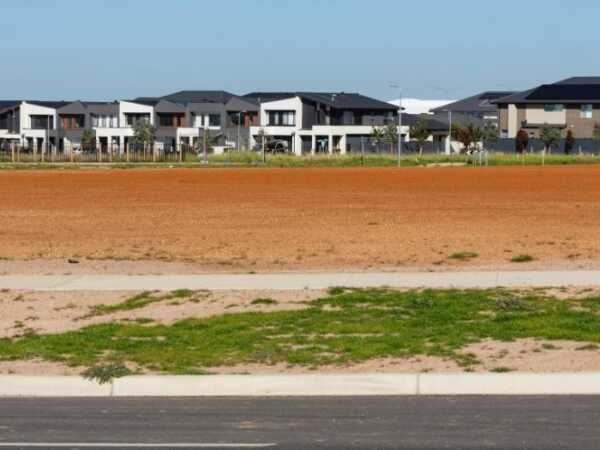
Camden is the clearest example of high-velocity greenfield development. Areas including Oran Park and Leppington continue to attract families seeking more affordable housing, larger lots, and access to expanding community infrastructure. Growth in Camden is closely tied to land release and transport delivery, making timing and staging critical considerations.
Blacktown offers a different profile entirely. Large-scale population growth sits alongside an established employment base and diverse housing stock, making it relevant not only for residential development but also for retail, industrial, and community infrastructure investment.
Liverpool continues to benefit from south-west Sydney’s expansion, supported by major precinct development, transport links, and proximity to key employment corridors. The Hills remains significant in the north-west, where population growth is underpinned by infrastructure delivery, sustained housing demand, and a well-established base of families and professionals. Penrith rounds out the western corridor, supported by relative affordability and improving connections to employment centres across greater Sydney.
Regional and coastal growth markets
Regional NSW is growing, but the quality of that growth varies considerably between locations.
Newcastle and Maitland benefit from their anchoring role in the Hunter economy. Employment, education, and health services support ongoing population growth with more economic depth than many smaller regional centres, making demand in these markets more durable over time.
The Central Coast retains strong lifestyle appeal and relative affordability compared with Sydney, but developers need to monitor new supply and local infrastructure capacity carefully, as growth can be uneven between suburbs.
Coastal markets, including Port Macquarie, Coffs Harbour, Tweed, and parts of the North Coast, continue to attract lifestyle migration and benefit from demographic shifts toward regional living. Demand in these areas can be strong, but exposure to affordability limits, seasonal employment patterns, and constraints on developable land means each location warrants its own assessment.
What is driving growth?
Three forces are doing most of the work: migration, housing supply, and infrastructure.
Net overseas migration has re-emerged as a major national growth driver, while internal migration continues to shape outer suburban and lifestyle markets. Australian Bureau of Statistics data released in 2026 confirms that capital city growth in 2024 and 2025 was primarily driven by overseas migration, with regional Australia also recording continued expansion.
In outer Sydney, household formation and affordability are the dominant local forces. Families priced out of inner and middle-ring suburbs continue moving toward growth corridors where new housing supply is available at accessible price points. In regional markets, lifestyle preferences, local employment, and access to services carry more weight.
Housing supply is ultimately the factor that converts population growth into development opportunity. Regions with active land release programs and confirmed infrastructure delivery can absorb growth effectively. Constrained areas may experience stronger price pressure but more limited population expansion.
Implications for investors
Population growth is a necessary condition for investment opportunity, but it is not sufficient on its own.
A fast-growing region with a large pipeline of new dwellings can still experience rental or price pressure if supply arrives faster than demand. Outer Sydney growth regions offer scale and depth, but they require careful assessment of release timing and competing stock. Regional markets may offer stronger yields and lower entry prices, but performance depends more heavily on local employment resilience and the depth of the services sector.
The most compelling opportunities in 2026 are in locations where population growth is backed by confirmed infrastructure, diverse employment, and manageable supply pipelines. Where all three align, demand tends to be durable rather than cyclical.
Implications for planners and developers
At the planning level, absolute growth is the primary signal for service demand. LGAs adding large numbers of residents need investment in schools, roads, health services, and public transport. The same data helps developers identify where long-term demand is strongest and most consistent.
Percentage growth remains important. Rapidly expanding suburbs may generate demand for new retail, childcare, medical, and community services well before broader LGA data captures the full picture. Developers who track suburb-level trends early are better positioned to move ahead of the market.
Population data should always be read alongside development approvals, land release schedules, and infrastructure commitments. That combination distinguishes durable, long-term growth from short-term spikes driven by a single project or temporary migration wave.
Risks to monitor in 2026
Infrastructure delays are among the most significant. Projects dependent on future transport or service upgrades should be assessed against confirmed funding and delivery timelines, not announcements alone. The gap between a headline commitment and a completed road or rail line can span years, and feasibility needs to reflect that.
Oversupply risk is most acute in greenfield corridors where multiple estates release stock simultaneously. In regional markets, the key question is whether population growth is supported by sustainable employment or driven by temporary project activity and short-term migration.
Interest rates, construction costs, and affordability constraints remain live variables across all markets. Even in high-growth regions, project feasibility can deteriorate quickly if buyer capacity weakens or build costs move faster than end values.
The Final Word
The fastest-growing regions in NSW in 2026 are led by outer Sydney's corridors, with Camden, Blacktown, Liverpool, The Hills, and Penrith at the front. Regional centres, including Newcastle, Maitland, the Central Coast, and selected coastal markets, continue to draw demand, each with its own risk and return profile.
The strongest development and investment cases are not found simply by chasing the highest growth percentage. They are built in locations where population growth, infrastructure delivery, housing supply, and local employment move together. Investors and developers who combine absolute growth data with suburb-level trends and supply pipeline analysis are the ones consistently identifying markets with durable demand and genuine long-term potential.