

Introduction
Population growth across Victoria is increasingly being shaped by affordability pressures, lifestyle preferences and the decentralisation of employment. As housing costs rise in inner Melbourne, more households are relocating to outer suburban corridors and regional centres where access to housing, space and amenity is more attainable. This shift is driving measurable growth across selected regions, with direct implications for property demand, rental performance and development activity.
For investors and developers, identifying where this growth is consolidating and understanding the conditions supporting it is essential for timing market entry and assessing long-term opportunity.
Understanding Victoria’s fastest-growing regions
Growth across Victoria is not evenly distributed. Instead, it is concentrated in specific Local Government Areas where population inflows are supported by infrastructure, housing supply and employment access.
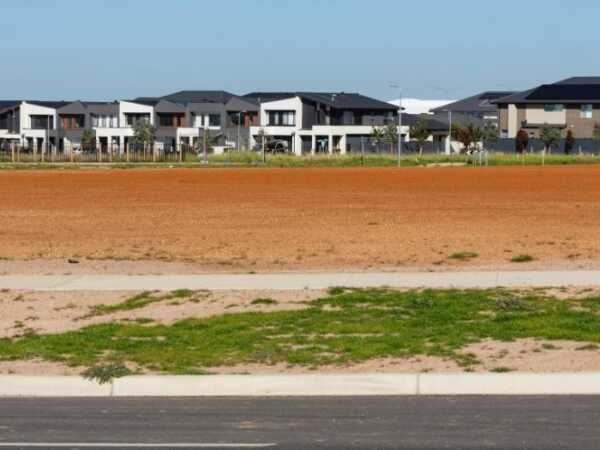
Melton and Wyndham in Melbourne’s west continue to record strong expansion, driven by relatively affordable housing and ongoing transport and infrastructure investment. Cardinia, in the south-east, is attracting family households seeking larger homes and improved connectivity to employment hubs.
The City of Greater Geelong represents a key regional growth centre, supported by lifestyle appeal, proximity to Melbourne and a diversified economic base. Maroondah, in Melbourne’s east, offers a different profile, with growth underpinned by established amenity, transport access and proximity to existing employment centres.
These regions illustrate the range of growth dynamics across the state, from high-volume outer suburban expansion to more balanced, amenity-driven growth in established areas.
What is driving population growth
Population growth in these regions is supported by a combination of structural and market-driven factors. Transport infrastructure plays a central role, improving accessibility between residential areas and employment centres. Road upgrades, rail extensions and improved public transport services increase the attractiveness of outer suburban and regional locations.
Employment growth is another key driver. Expansion in sectors such as healthcare, education and construction is creating local job opportunities, which in turn support population inflows. These sectors are particularly important in regional centres, where diversified employment reduces reliance on a single industry.
Access to established amenity also influences demand. Schools, retail centres and open space contribute to liveability, making certain locations more attractive to families and long-term residents.
Economic conditions shaping demand
Economic factors directly influence how population growth translates into housing demand. Employment availability and income levels affect both purchasing power and rental demand, while broader economic conditions influence migration patterns and investment activity.
Regions experiencing consistent job creation tend to demonstrate more stable demand. Healthcare and education precincts, in particular, provide reliable employment bases that support both owner-occupier and rental markets.
Construction activity also plays a dual role. It generates employment while simultaneously increasing housing supply, which can support or moderate price growth depending on the balance between supply and demand.
Housing market trends in growth areas
Property markets in high-growth regions exhibit several consistent patterns. Increased population leads to higher demand for both rental and owner-occupied housing, often resulting in rising rental yields and upward pressure on prices.
In some locations, limited available stock can create competitive conditions, particularly for well-located properties. However, areas with large land release pipelines may experience periods where supply temporarily outpaces demand, affecting price growth and absorption rates.
Understanding these dynamics is critical. Strong population growth alone does not guarantee sustained price increases if supply is not managed effectively.
Migration patterns and demographic shifts
Population growth in Victoria is supported by both interstate and overseas migration. Interstate migration is often driven by employment opportunities and lifestyle considerations, while overseas migration contributes to overall population increases and labour force growth.
New residents are typically younger households and working professionals, which supports demand for family housing and rental accommodation. This demographic profile influences the types of properties that perform well in growth regions, with a focus on affordability, accessibility and amenity.
Risks associated with rapid growth
While strong growth presents opportunities, it also introduces risks that need to be managed. Infrastructure capacity can become strained if population increases outpace service delivery, affecting transport, education and healthcare systems.
Oversupply is another consideration, particularly in areas with significant land development pipelines. Large volumes of new housing can create short-term imbalances between supply and demand, impacting pricing and rental performance.
Market conditions can also shift due to broader economic factors such as interest rates and policy changes. These variables need to be incorporated into investment decision-making.
Assessing investment potential
Fast-growing regions attract investor interest due to a combination of affordability, economic diversity and demand fundamentals. Lower entry prices compared to inner Melbourne improve accessibility, while population growth supports rental demand and occupancy levels.
Diversified local economies provide a level of resilience, reducing exposure to sector-specific downturns. Regions with strong employment bases, infrastructure investment and consistent population inflows are more likely to sustain long-term growth.
However, investment decisions should be based on detailed local analysis rather than broad growth trends. Variations in supply, infrastructure and demand mean that outcomes can differ significantly between regions.
Final perspective
Victoria’s fastest-growing regions present a range of opportunities for investors and developers, but success depends on understanding the underlying drivers of growth. Population increases, infrastructure delivery and economic conditions all interact to shape demand and market performance.
By focusing on regions where these factors are aligned, and by applying disciplined analysis to supply pipelines and local conditions, investors can identify markets that offer both stable income and long-term growth potential in an evolving property landscape.