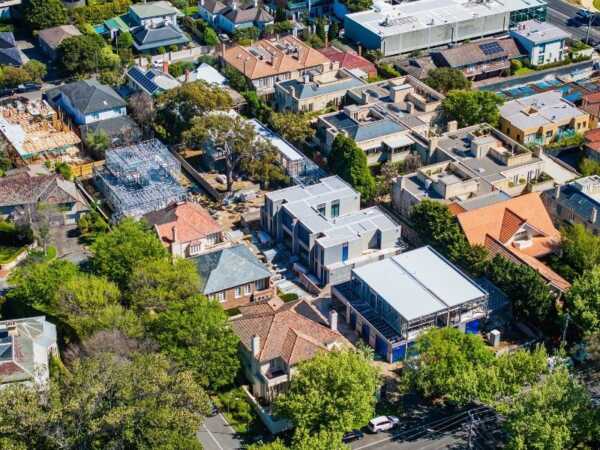



Developers are circling Sydney’s eastern suburbs, with tighter housing supply, clearer planning pathways and more stable market conditions putting premium sites back on the radar.
After several tough years of high construction costs, elevated interest rates and lengthy approval processes, conditions are becoming more favourable for developers.
Cushman & Wakefield National Director & Co-Head of Investment Sales, NSW, Matt Pontey, said the eastern suburbs offered something developers could not easily replicate: established neighbourhoods, strong buyer demand and limited new housing.
“Proximity to the CBD, the lifestyle and the amenity are not replicable, so there will always be demand for this area,” he said.
“That underlying certainty is what brings developers back.”
Planning Pathways Open Doors
Planning reform is creating new routes for developers, with state-led development pathways and new master plans offering alternatives to traditional council approvals.
This is particularly relevant in the eastern suburbs, where tightly held land limits development opportunities.
Cushman & Wakefield National Director & Co-Head of Investment Sales, NSW, Miron Solomons, said the changes were giving developers greater certainty.
“Scale is now a positive rather than a liability,” he said.
“The Housing Delivery Authority (HDA) pathway works well for genuine projects that will deliver real outcomes for the community and put stock into an undersupplied market.”
But proximity to transport remains critical.
“Density belongs around key stations, which in this part of Sydney means Edgecliff, the proposed Woollahra Station and Bondi Junction,” Mr Solomons said.
Capital Back, But Choosier Than Ever
Developers may be returning to Sydney’s core markets, but they are not throwing open the chequebook.
Buyers remain focused on sites where the planning pathway is credible, the end market is well understood, and they have a clear competitive advantage.
That is a notable change from previous cycles, when Sydney’s high pricing pushed some investors and developers towards markets such as Wollongong, Newcastle and Melbourne in search of stronger returns.
Mr Pontey said feasibility was improving.
“Debt costs have settled, builders will price fixed-sum work again, and the end value is evidenced rather than forecast,” he said.
“You are not carrying absorption risk, infrastructure risk or the risk of proving a new address.”
Developers Plan Ahead
Mr Solomons said the limited supply of developable land made timing critical.
“The Eastern Suburbs does not replenish its supply. Amalgamations take years to assemble, and most of the obvious corners are already spoken for, so the pool of genuinely developable sites is finite and shrinking,” he said.
“A site bought today delivers into 2029 and 2030 against very little competing stock.”
But he said developers still needed to be disciplined.
“The margin comes out of the entry price and the structure, not out of a rising market,” Mr Solomons said.
“Terms matter as much as price, whether that is a longer settlement, a conditional structure or holding income while the planning work runs.”