

New property developments in Australia are becoming increasingly rare, leaving investors and tenants feeling the squeeze.
CBRE’s 2026 Pacific Market Outlook predicts that new developments will fall 20–50 per cent short of historical levels for the rest of the decade, limiting options and creating a mounting urgency to act.
CBRE warns that the supply shortfall will tighten competition for existing assets in 2026, due to a phenomenon dubbed ‘TINA’ - There Is No Alternative.
We spoke with Sameer Chopra, CBRE’s Head of Research, Pacific, to find out how these conditions are likely to play out in the market.
Winners in a Constrained Market
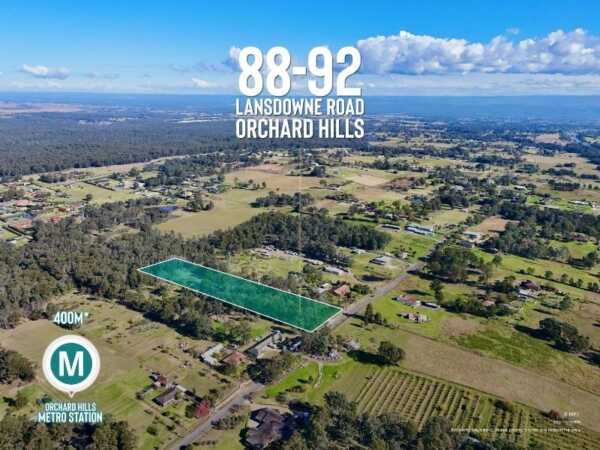
With the pipeline drying up, attention is shifting to assets that deliver income and resilience. Premium properties near emerging infrastructure such as metro lines, airports, or defence sites are positioned to withstand disruption.
“We expect increasing demand from people to live and work close to major infrastructure,” Mr Chopra said.
“Commute times are a key consideration in residential, and likewise having purpose-built airport and toll-roads to assist in moving freight adds to the value proposition.”
The report identifies the strongest performers in 2026 as:
- Offices in Brisbane and Canberra
- Industrial property in Adelaide and Brisbane
- Shopping centres in Sydney and Melbourne
- Apartments in Gold Coast and Perth
Rising Transaction Activity and Rent Growth
Transaction activity is set to accelerate this year, with volumes projected to rise 5-10 per cent, led by faster growth in the office sector.
Economic rents for premium offices have already surged more than 60 per cent between 2020 and 2025.
Net effective rent growth is forecast at 7.3 per cent in Brisbane and 6.6 per cent in Sydney, with Melbourne on track to recover from 2027 onwards.
“At this stage, prospects of reducing supply are bringing forward occupier decisions,” Mr Chopra said.
“This should manifest in downward pressure on incentives.”
Population and Wealth Fuel Demand
The market squeeze is playing out against a backdrop of moderate economic growth.
Australia is projected to expand by 2 per cent in 2026, with interest rates largely stable.
Inflation should ease in the second half of the year to 3.2 per cent, while unemployment may edge up to 4.6 per cent, with job growth skewed toward care and white-collar sectors.
Population, driven heavily by immigration, is another key factor, with 240,000 new migrants expected this year.
The report highlights a “triple boost” for consumer-facing real estate: rising population, rising jobs, and rising incomes, collectively adding an estimated $1 trillion of wealth over the next decade, a significant share of which will flow into housing, retail, and leisure.
“Real estate demand has a close relationship with population growth,” Mr Chopra said.
“We expect that for every one million people, an additional 800,000 sqm of shopping centre space, 11,500 hotel rooms and 420,000 apartments are needed.”